On 6 October 2026, I travelled from Chur in Switzerland to Tirano in Italy using regular Rhätische Bahn trains rather than a branded Bernina Express panoramic carriage. I left Chur at 09:58 and reached Tirano at 17:06, after changing at Samedan and Pontresina and deliberately stopping for lunch at Alp Grüm.
I made the journey this way mainly because I already had an Interrail pass. What began as the cheaper option also gave me opening windows, more flexibility, a surprise open-air carriage, and the freedom to leave the train along the way.
My Bernina regional-train journey at a glance
- Date: 6 October 2026.
- Route: Chur → Samedan → Pontresina → Alp Grüm → Tirano.
- Actual time: 09:58–17:06, including both stopovers.
- Travel time: 7 hours and 8 minutes from Chur departure to Tirano arrival.
- Class: second class for every train.
- Interrail: one travel day, with no additional train fare or compulsory reservation.
- Additional cost: CHF 17.50 (about €18.70) for lunch and sparkling water at Alp Grüm.
- Best seat based on my journey: the right-hand side when facing the direction of travel.
- Walking: approximately 9,500 steps.
- Verdict: 9.5/10, and I would choose the regional trains again.
Was this actually the Bernina Express?
Not technically. The Bernina Express is the named panoramic service with large windows, onboard extras, and a compulsory seat reservation. I used ordinary Rhätische Bahn regional trains that follow the same railway lines and pass the same major scenery. RhB describes the regional option as regular-timetable trains with classic windows that can be opened; it now offers an optional CHF 5 seat reservation between St. Moritz and Tirano. Compare the Bernina Express and regional trains on the official RhB website.
Interrail confirms that its passes cover the regional trains on this route. It also explains that the panoramic Bernina Express requires a reservation, while regional trains give you a more flexible journey with possible changes along the way. Read the Interrail guide to the Bernina Express route.
My exact Chur–Tirano regional-train timetable
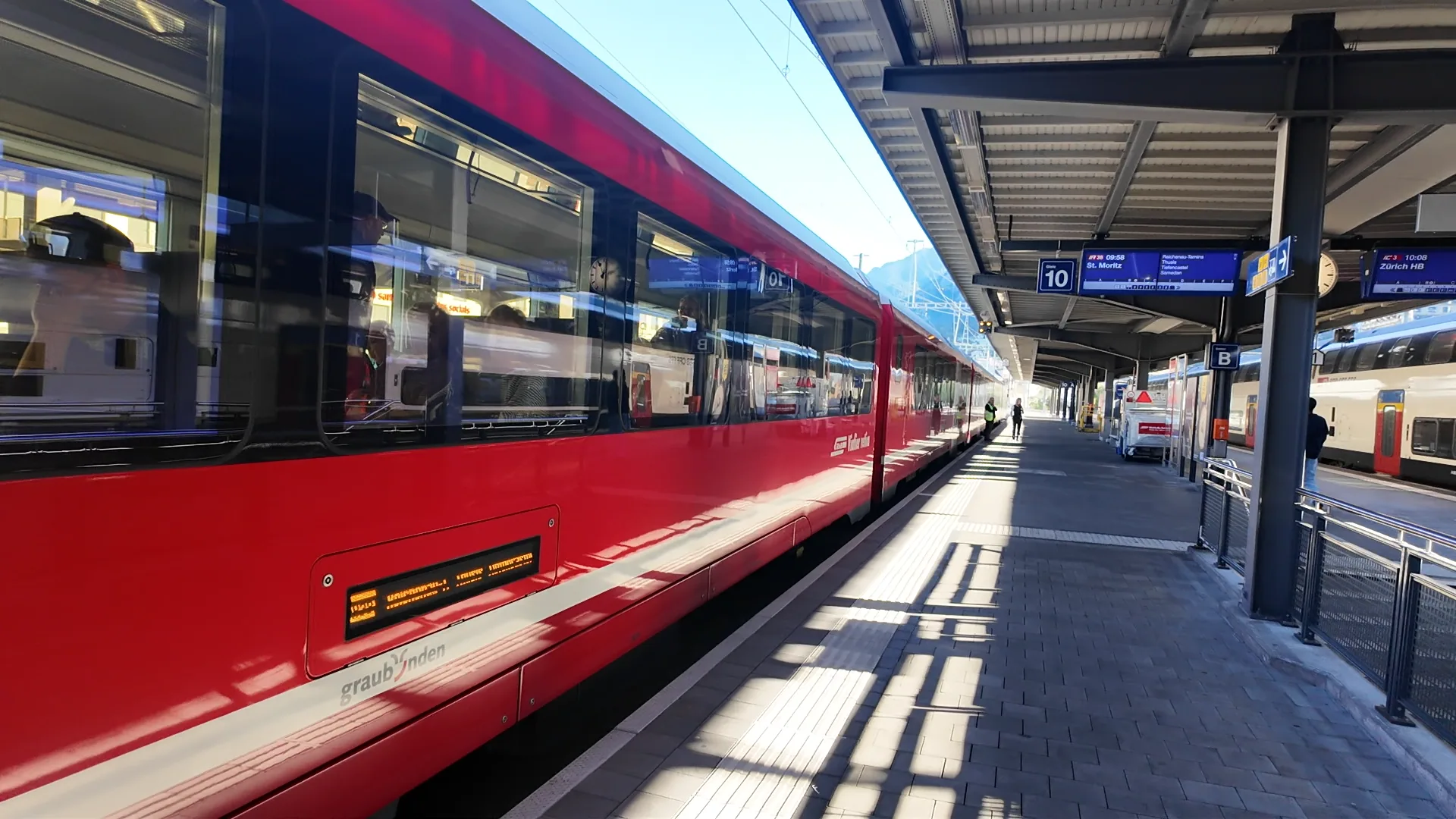
I reconstructed the following times from the departure boards in my photos, their timestamps, and the journey I saved in the SBB app. That corrected two times I had initially remembered incorrectly: the first train left Chur at 09:58, not 09:56, and the Alp Grüm exterior photo was taken at 13:48, six minutes after the train arrived.
- Chur 09:58 → Samedan 11:45: IR38 towards St. Moritz. I left it at Samedan.
- Samedan 11:47 → Pontresina 11:55: a direct regional train towards Pontresina, with only two minutes to change.
- Pontresina 13:04 → Alp Grüm 13:42: a regional train continuing towards Tirano. I left it at Alp Grüm for lunch.
- Alp Grüm 15:05 → Tirano 17:06: the final regional section into Italy.
Which side should you sit on for each train?
These are my recommendations when facing the direction the train is travelling. The railway curves constantly, so both sides receive good views, but the right worked best for the moments I most wanted to photograph.
- Chur → Samedan: right-hand side. This gave me the Landwasser Viaduct view and a strong perspective of the train curving into the tunnel.
- Samedan → Pontresina: right-hand side. The ride lasts only eight minutes, so the side barely matters here.
- Pontresina → Alp Grüm: mainly the right-hand side. It worked well for the pass landscapes, Lago Bianco, and photographs from the open carriage.
- Alp Grüm → Tirano: right-hand side. I had clear views over Val Poschiavo and photographed the complete train curling around the Brusio Circular Viaduct.
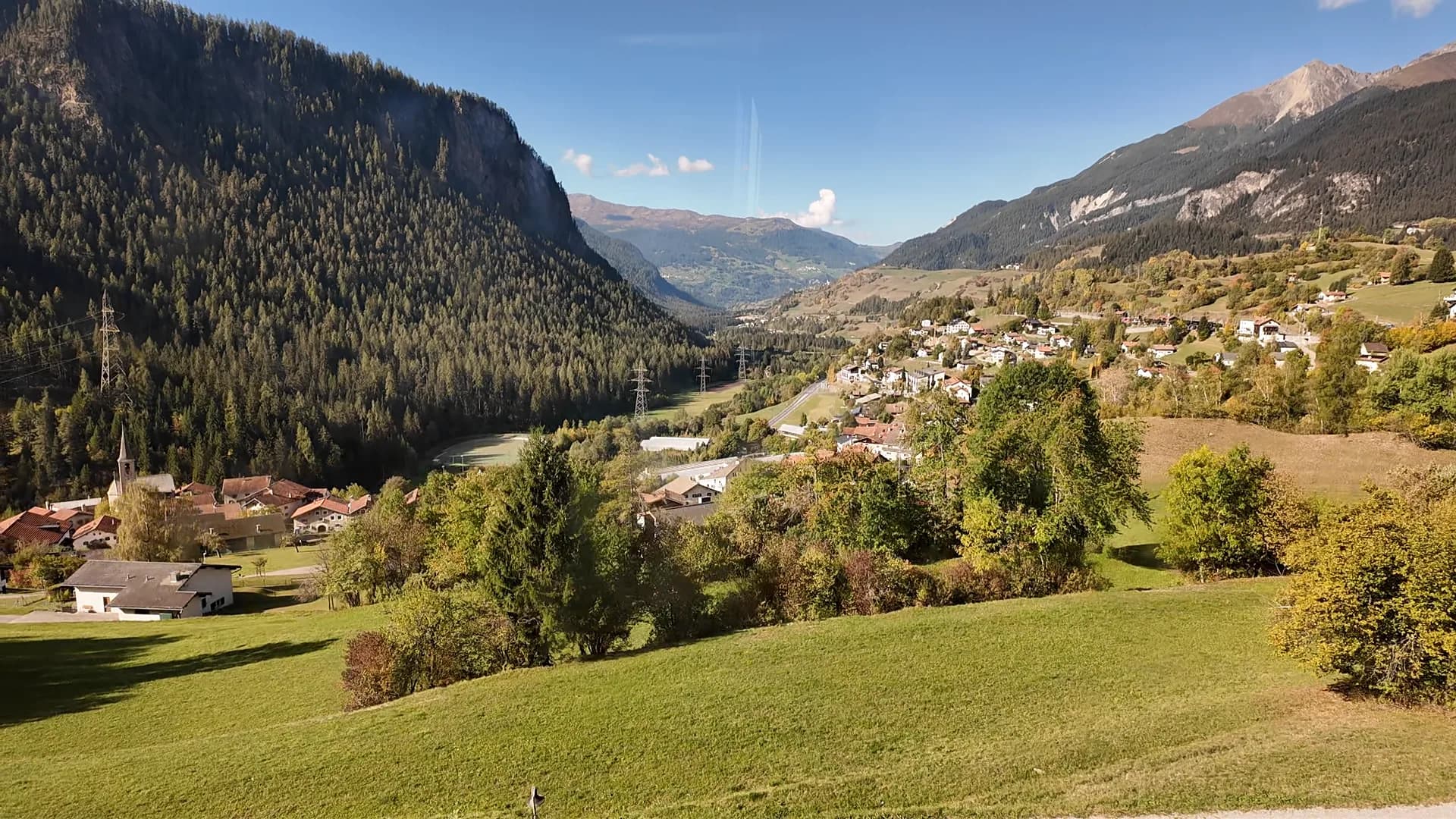
Chur to Samedan: the Landwasser Viaduct and Albula Line
I reached Chur station later than I should have and boarded quickly. I found a right-side seat, but it faced backwards because most forward-facing seats were already occupied. About 30 minutes later, the passenger opposite left and I moved into her seat. The train was not packed, and my large backpack could remain on a nearby empty seat.
This first section follows the Albula Line. Together with the Bernina Line, it forms the UNESCO-listed Rhaetian Railway in the Albula/Bernina Landscapes. UNESCO describes the two historic lines as an exceptional combination of railway engineering and Alpine landscape. Read the UNESCO World Heritage description.
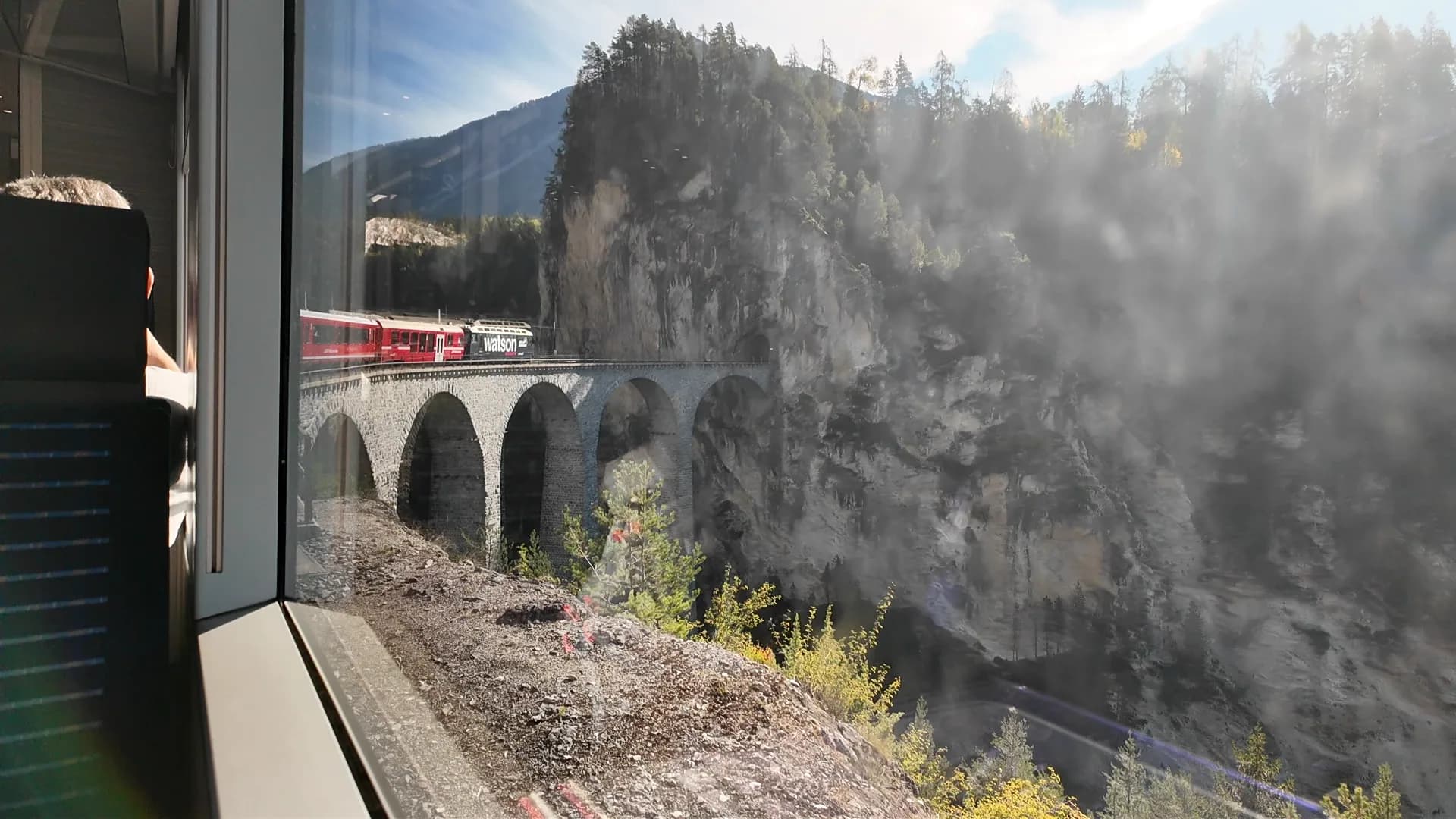
The scenery was beautiful throughout, but the Landwasser Viaduct was the moment that lived up most strongly to everything I had heard. An onboard announcement gave me time to prepare my camera. Because I sat fairly far back, I could see almost the entire red train bending across the stone arches and disappearing directly into the mountain tunnel.
The two-minute change at Samedan
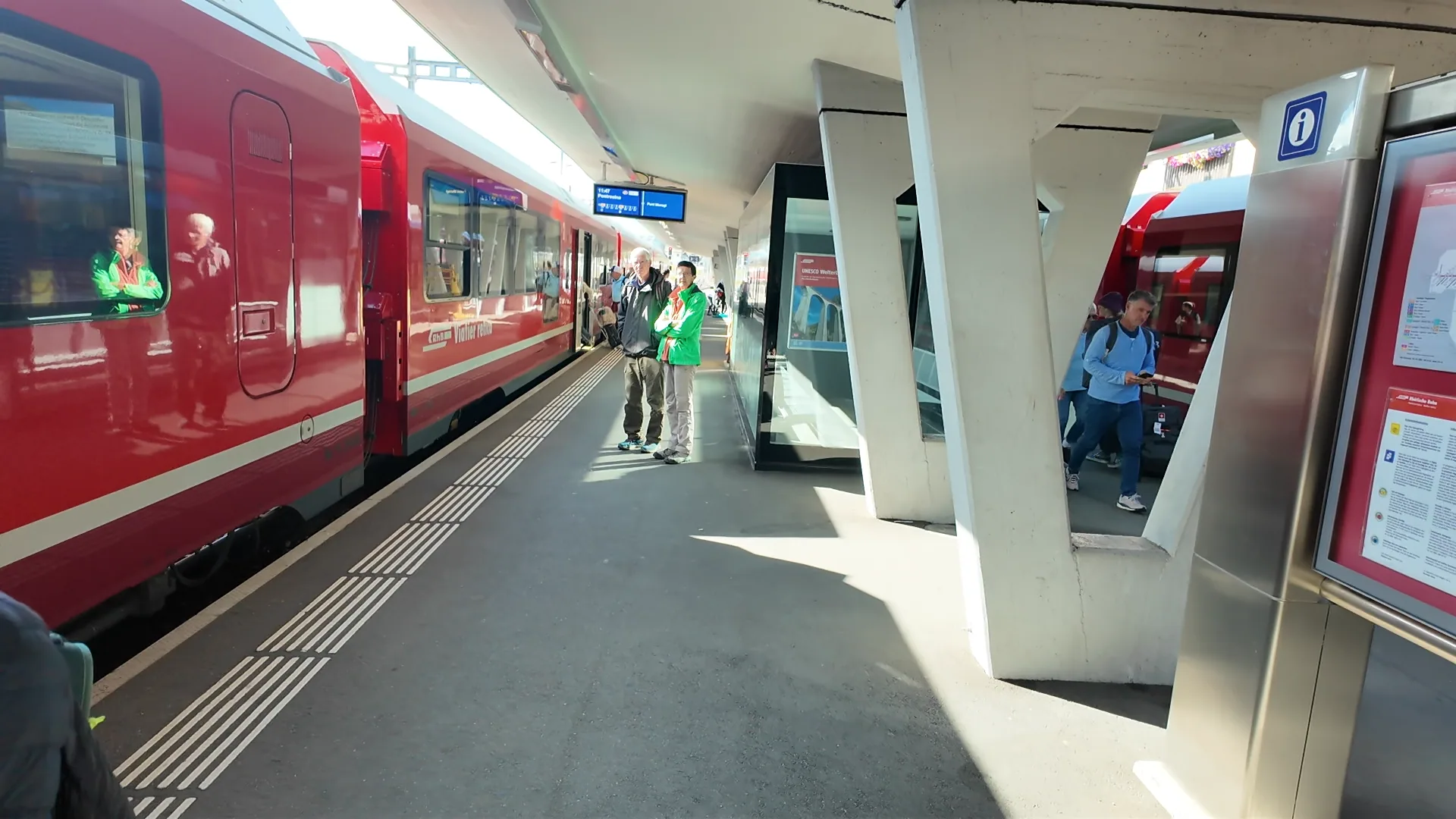
My first train reached Samedan at 11:45 and the connection to Pontresina was scheduled for 11:47. I had not checked the platform beforehand, which made those two minutes much more stressful than necessary. Once I saw the board, I found the correct train and the transfer worked without a problem, but I do not know whether the connecting train was being held for arriving passengers.
Was my short Pontresina stop worthwhile?
I arrived at 11:55 and left at 13:04. After orienting myself and taking a station photo at 12:11, I had roughly 50 minutes to walk uphill with my full backpack. I saw a little of the area close to the station, but not enough to make the stop worthwhile. Pontresina needs more time than that if you want the detour to feel meaningful.
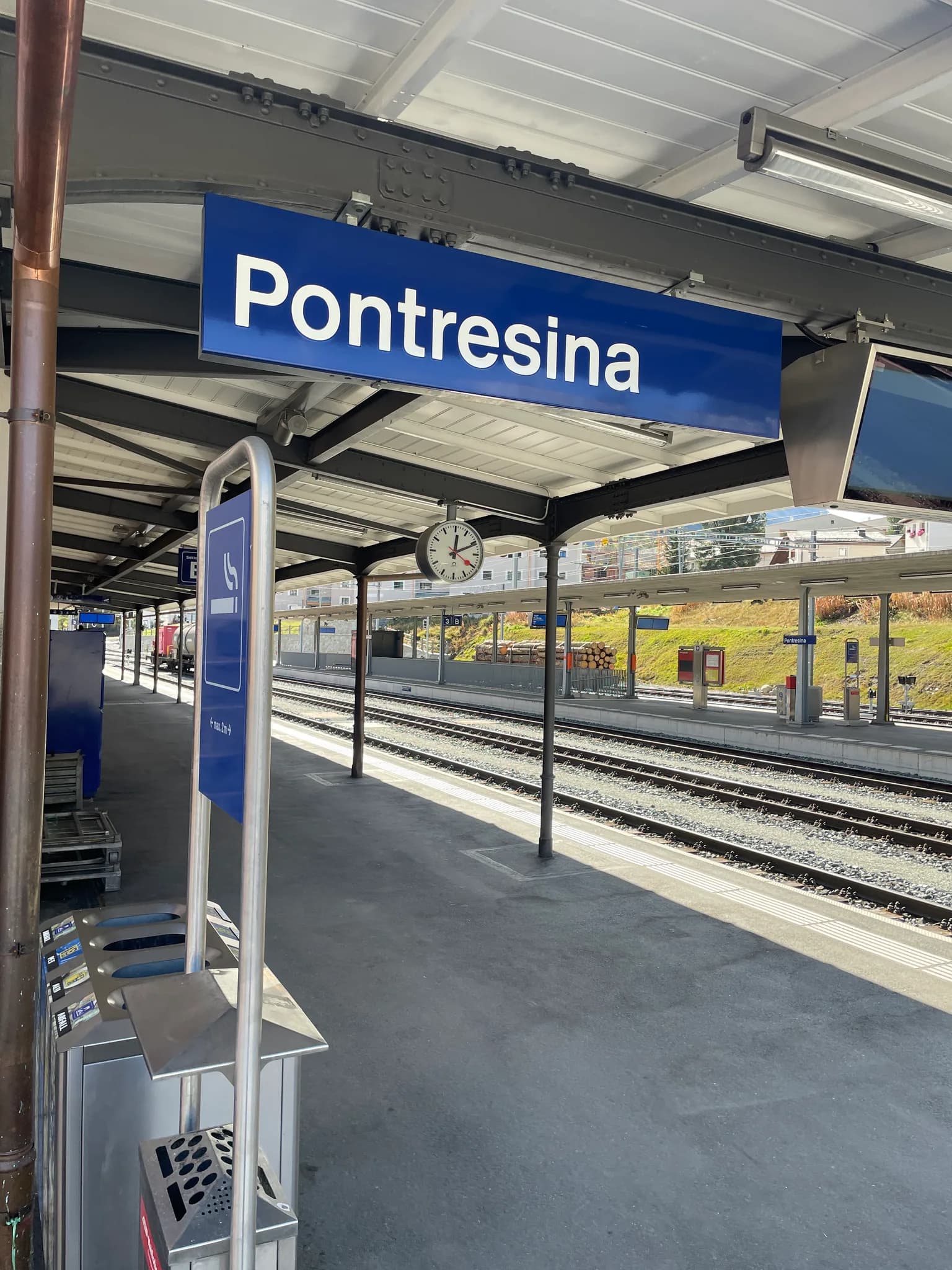
If I repeated the journey, I would either stay in Pontresina for several hours or skip the stop and spend the extra time at Alp Grüm. My short visit sat awkwardly between those two better options.
The surprise open-air carriage from Pontresina
At Pontresina, I discovered an open-air carriage by chance. Anyone with a valid ticket could enter it, it had dedicated outdoor seats, and signs warned passengers to keep their hands inside the carriage. There was no glass between me and the landscape. I could hear the train, feel the air, move between sides for photographs, and even shared the carriage with a dog.
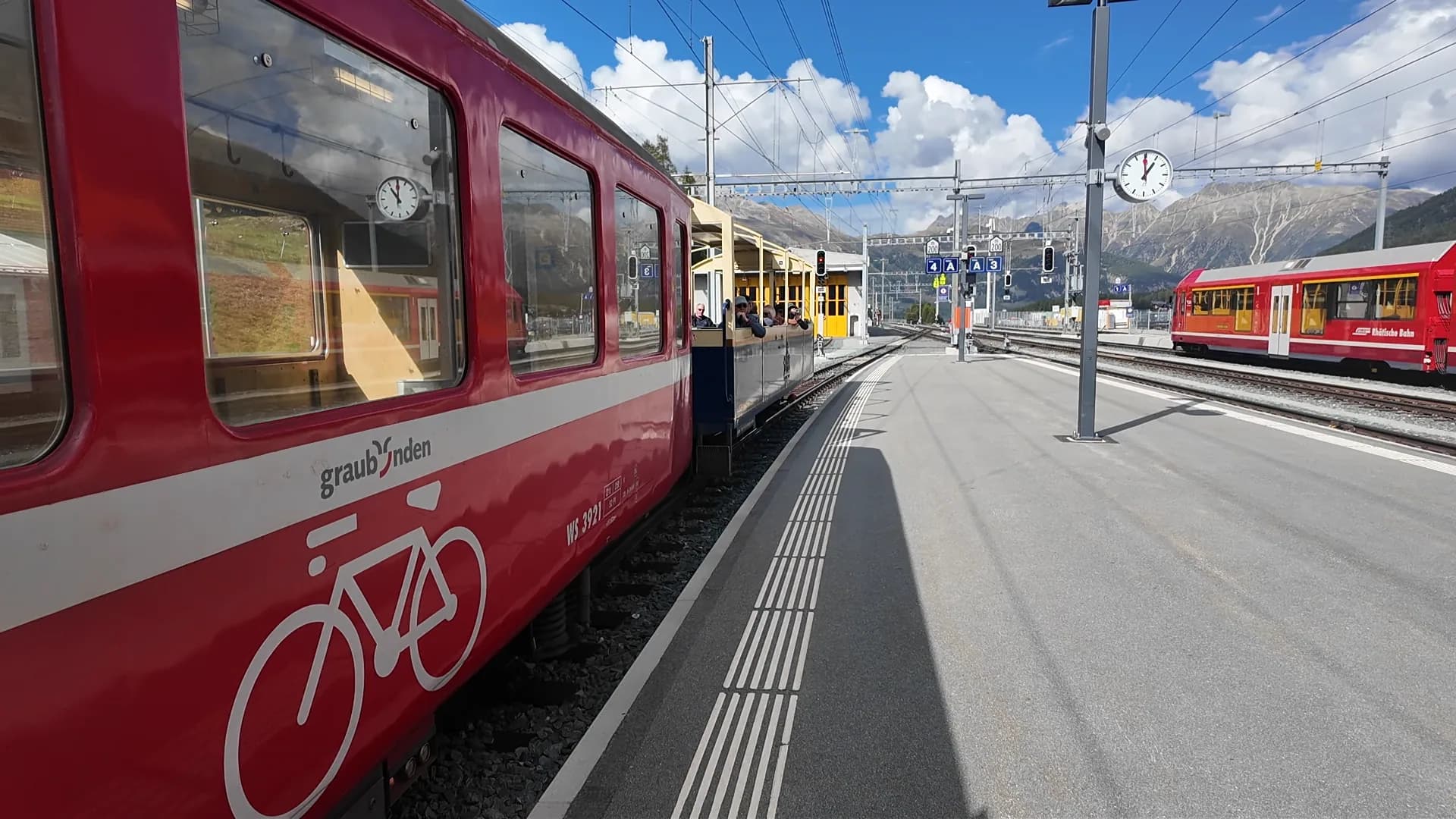
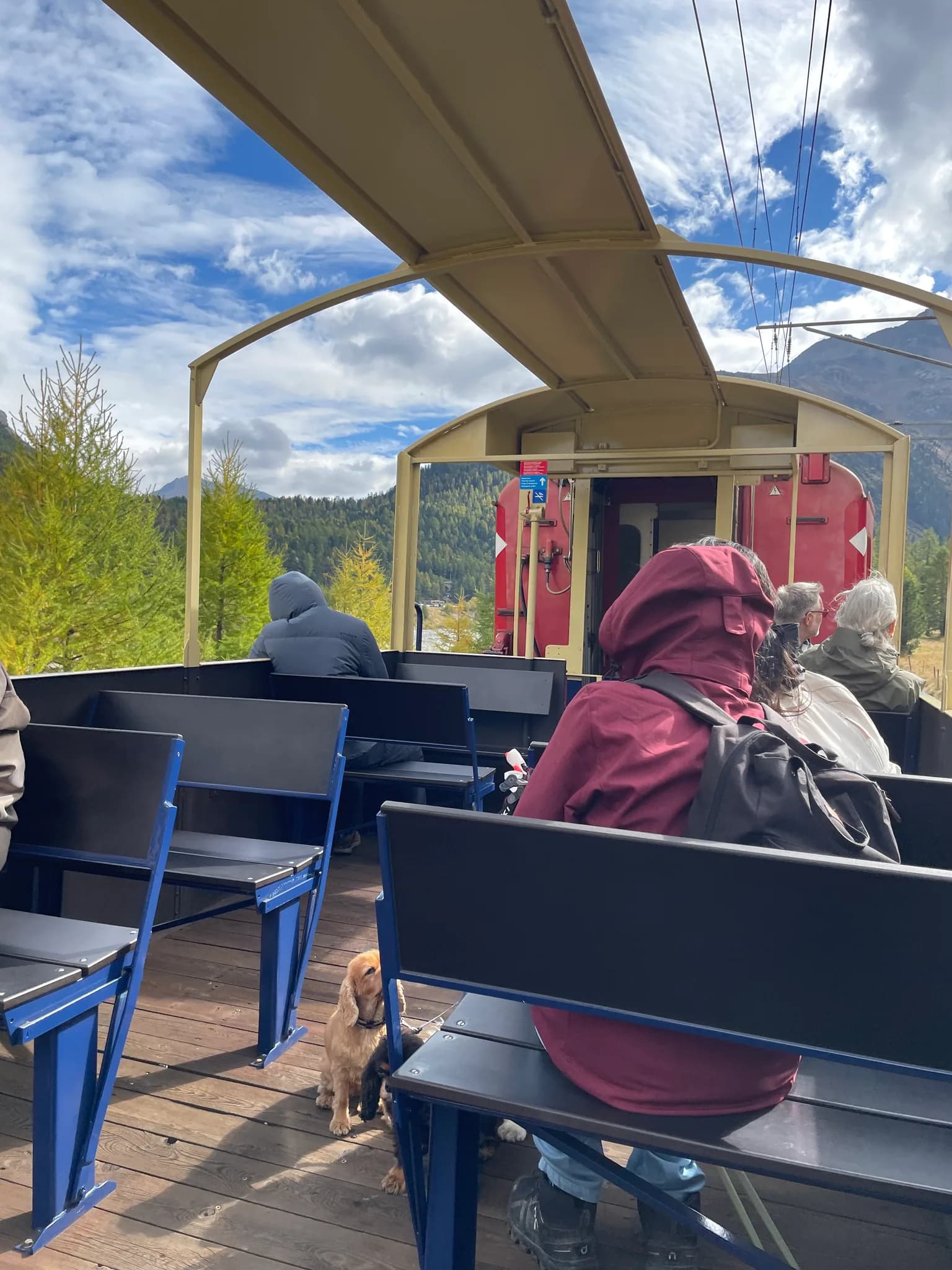
I remained outside until shortly before Alp Grüm. My jacket and hoodie were sufficient, but shorts became a poor choice as the train gained altitude. Trousers would have made the experience more comfortable.
Do not assume an open carriage will be attached to your train. RhB’s published 2026 Bernina schedule listed daily open-carriage operation from 22 June to 30 August, yet I unexpectedly encountered one on 6 October. Equipment and weather can change, so treat it as a bonus and check the current timetable rather than building the day around it. Check the official open scenic carriage information.
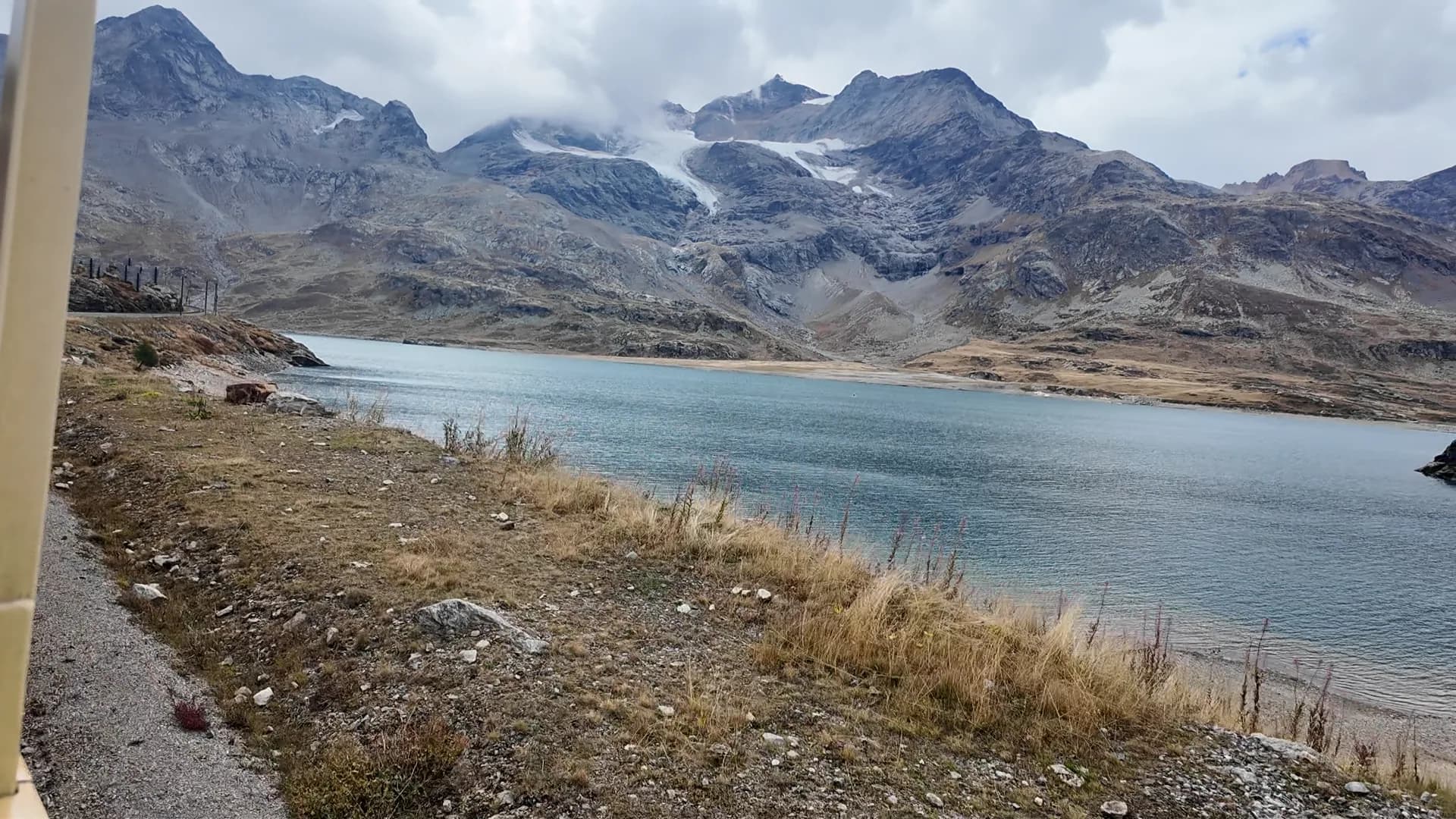
Pontresina to Alp Grüm: lakes, glaciers and the red train
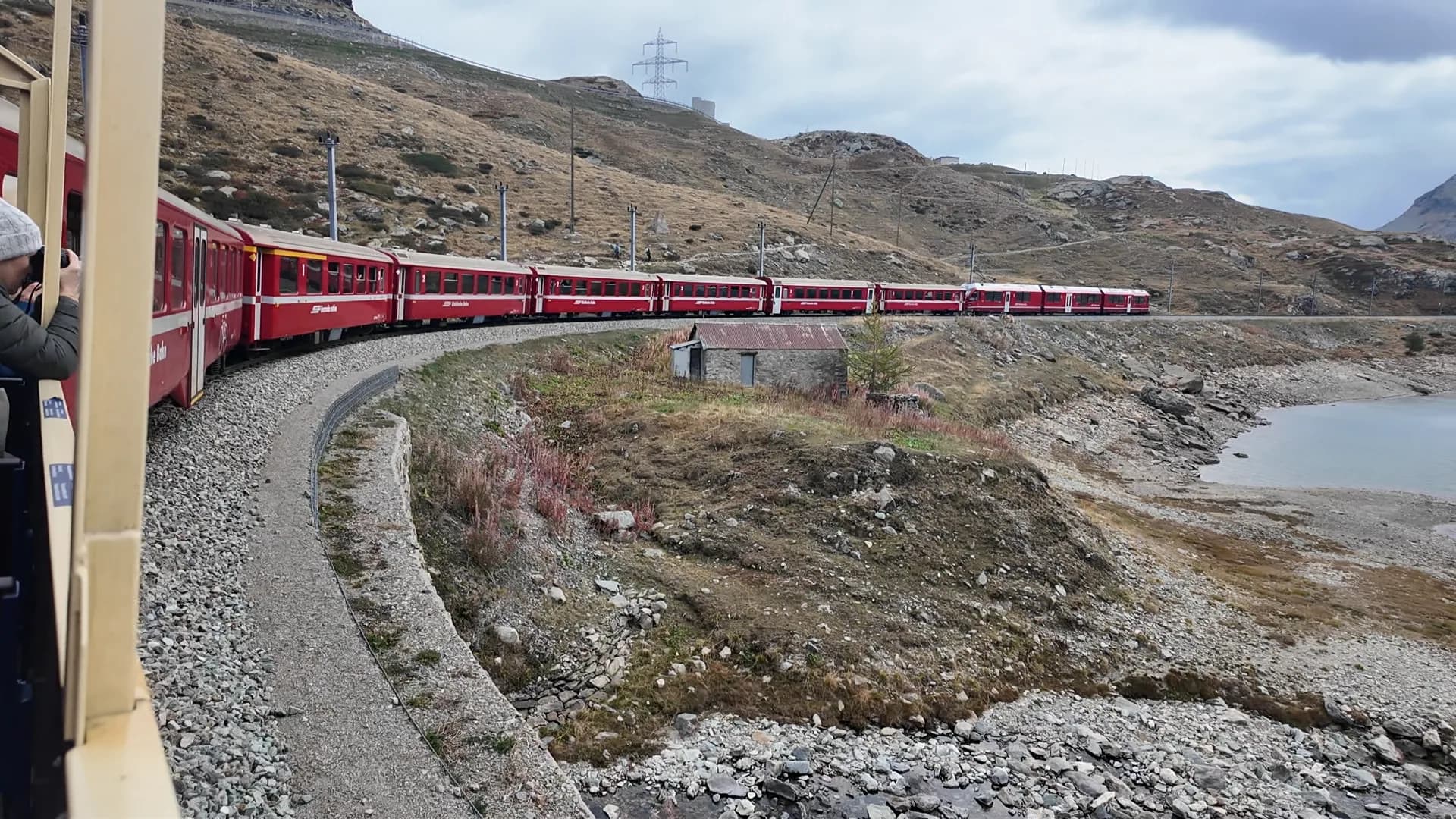
This was the part where the regional-train choice felt especially rewarding. With an unobstructed view, I could photograph the red train curving across the open landscape and watch the scenery change as we climbed towards the Bernina Pass. The train also carried a bicycle carriage on this Pontresina–Tirano service.
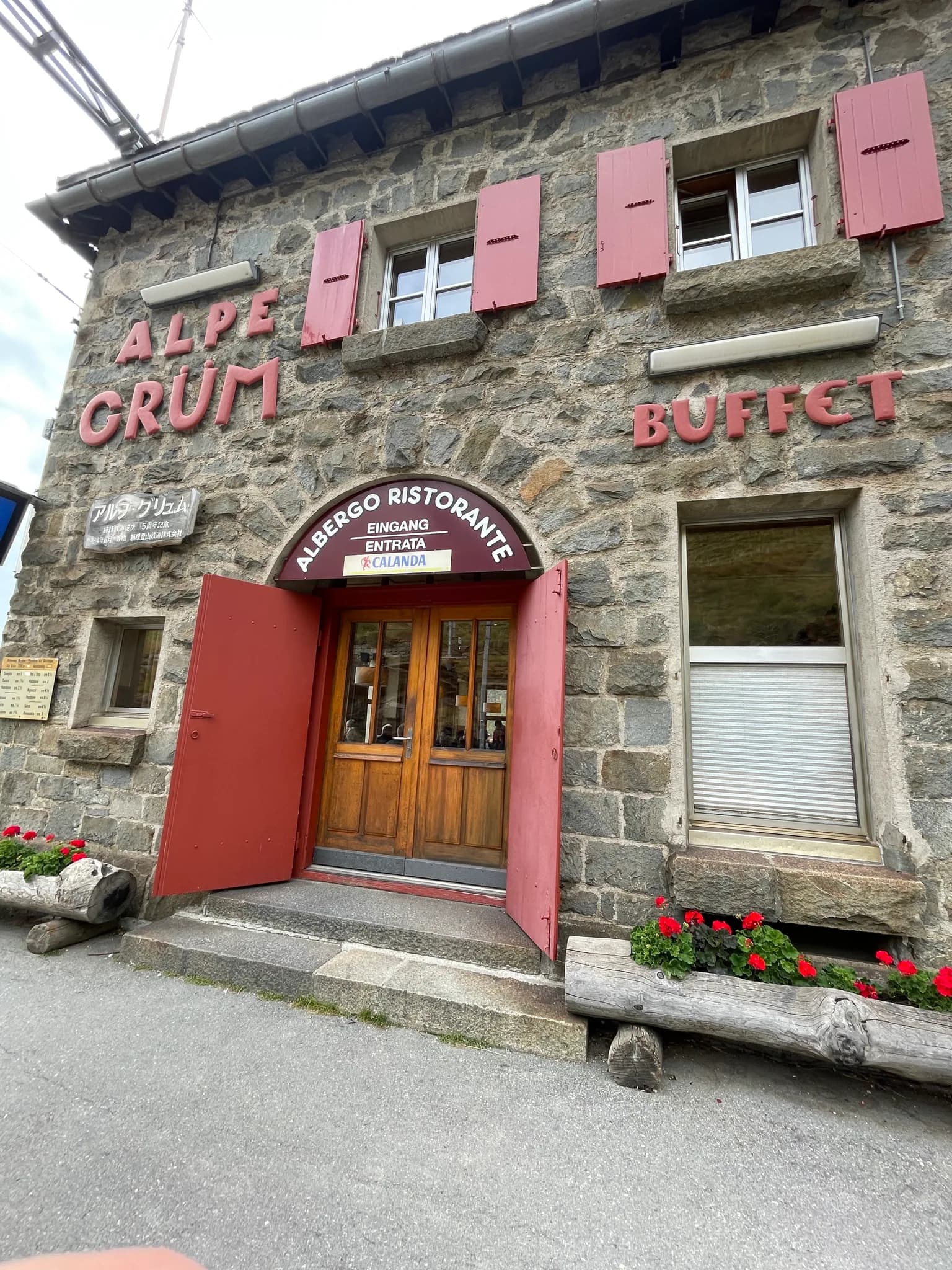
My lunch stop at Alp Grüm
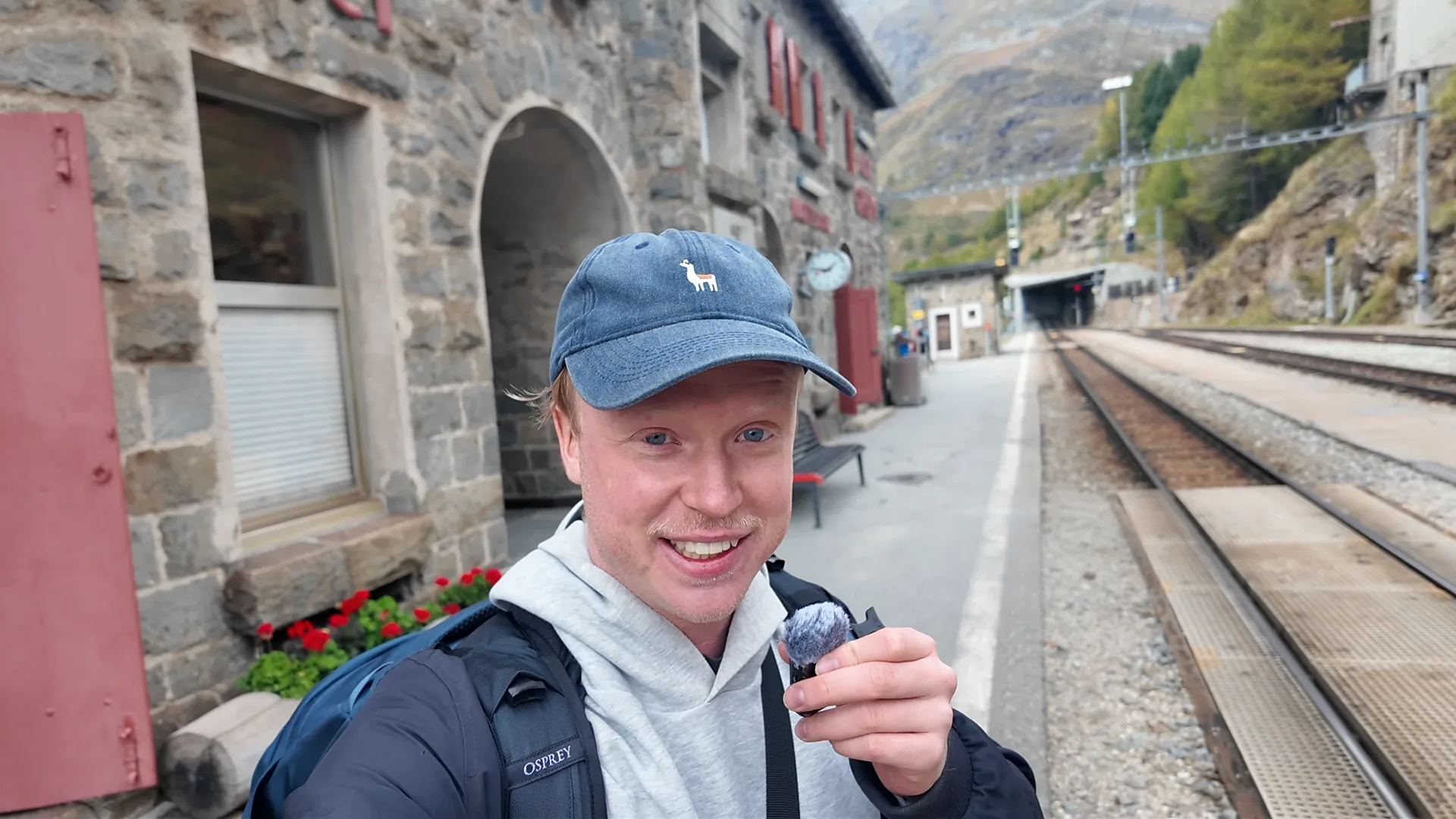
The train reached Alp Grüm at 13:42. Six minutes later, at 13:48, I took the exterior photo below before entering the station restaurant. My next train departed at 15:05, giving me one hour and 23 minutes for lunch and the viewpoint beside the station.
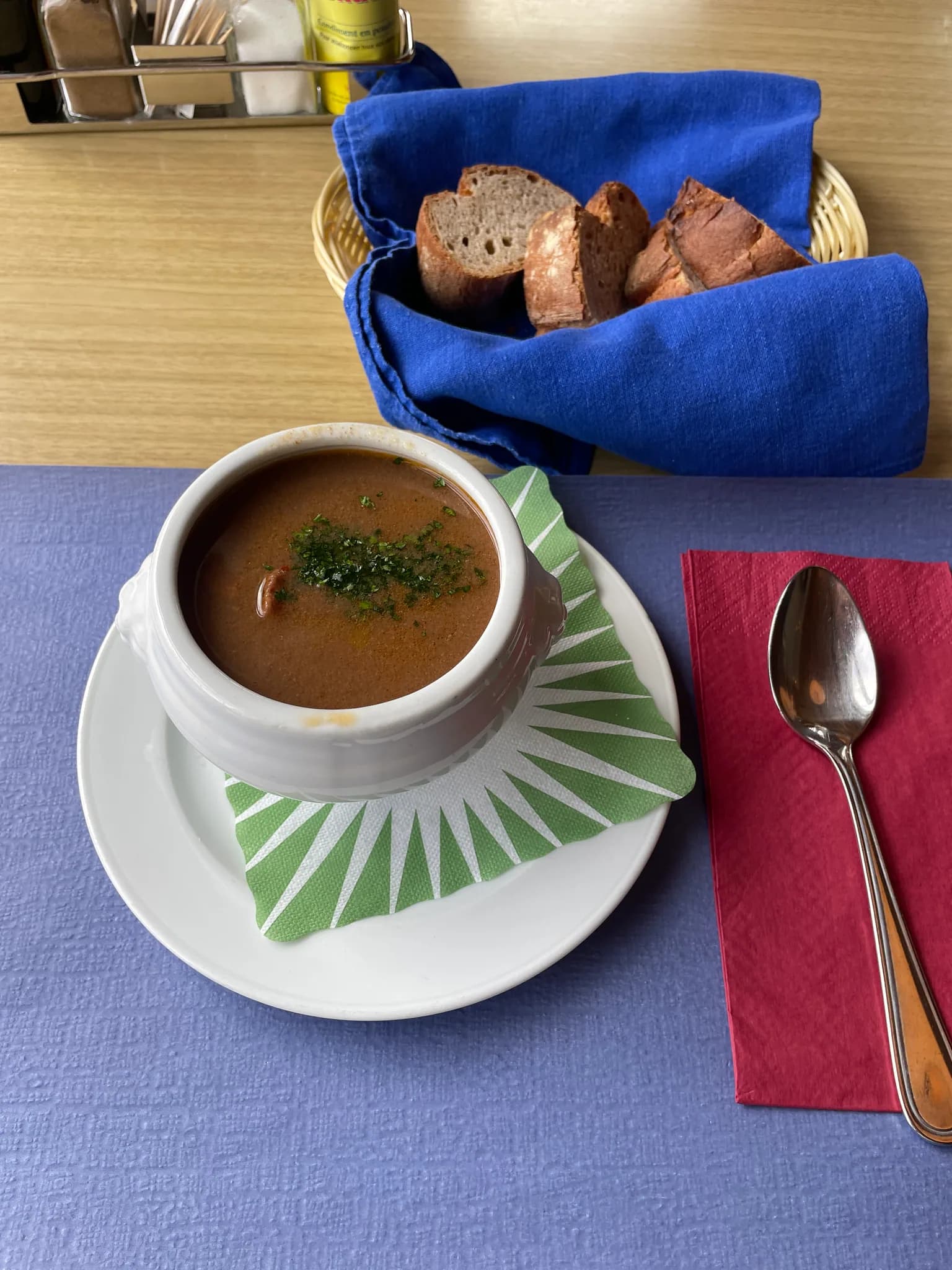
I ordered goulash soup with bread for CHF 14 (about €14.96) and sparkling water for CHF 3.50 (about €3.74). The first serving of bread was not enough, but the restaurant gave me more without charging extra. With that, the meal became filling. I would rate the food 7/10: good enough for a scenic lunch stop, though not the best meal of the trip. I paid by card and did not need a reservation during my October visit.
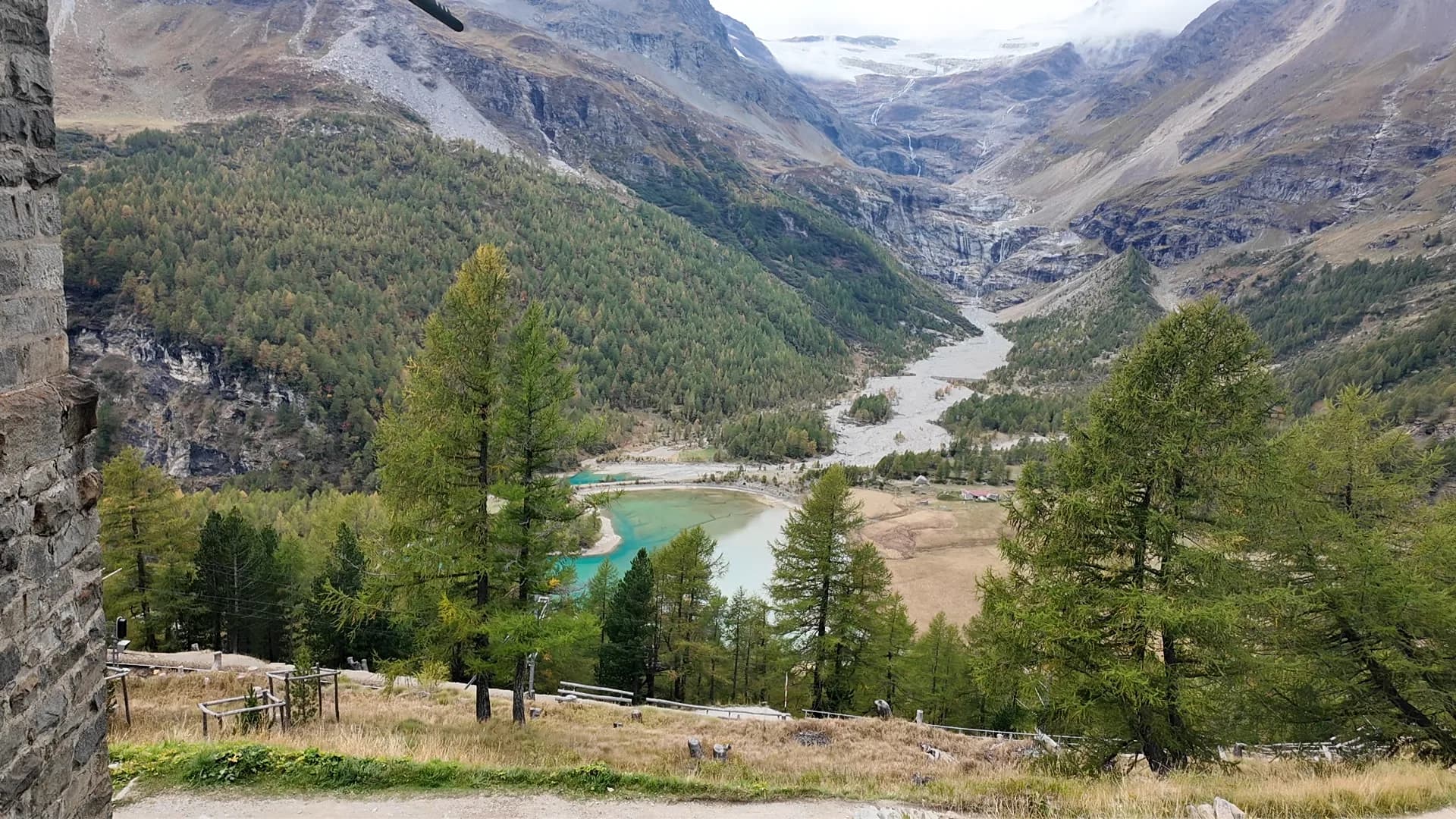
The reason to stop was the complete setting rather than the restaurant alone: railway tracks, steep green slopes, water, glaciers, and a wide valley opening below the station. Early in the day the sky had been crystal clear. By Alp Grüm, clouds were gathering and rain arrived shortly before the next train, but the view still made the stop worthwhile.
Alp Grüm to Tirano: rain, Val Poschiavo and Brusio
The 15:05 train was not crowded. Some entire carriages with opening windows were marked as reserved for groups, so I stayed close to my luggage and used an available second-class seat in another carriage instead. There was no border-control check during my journey.
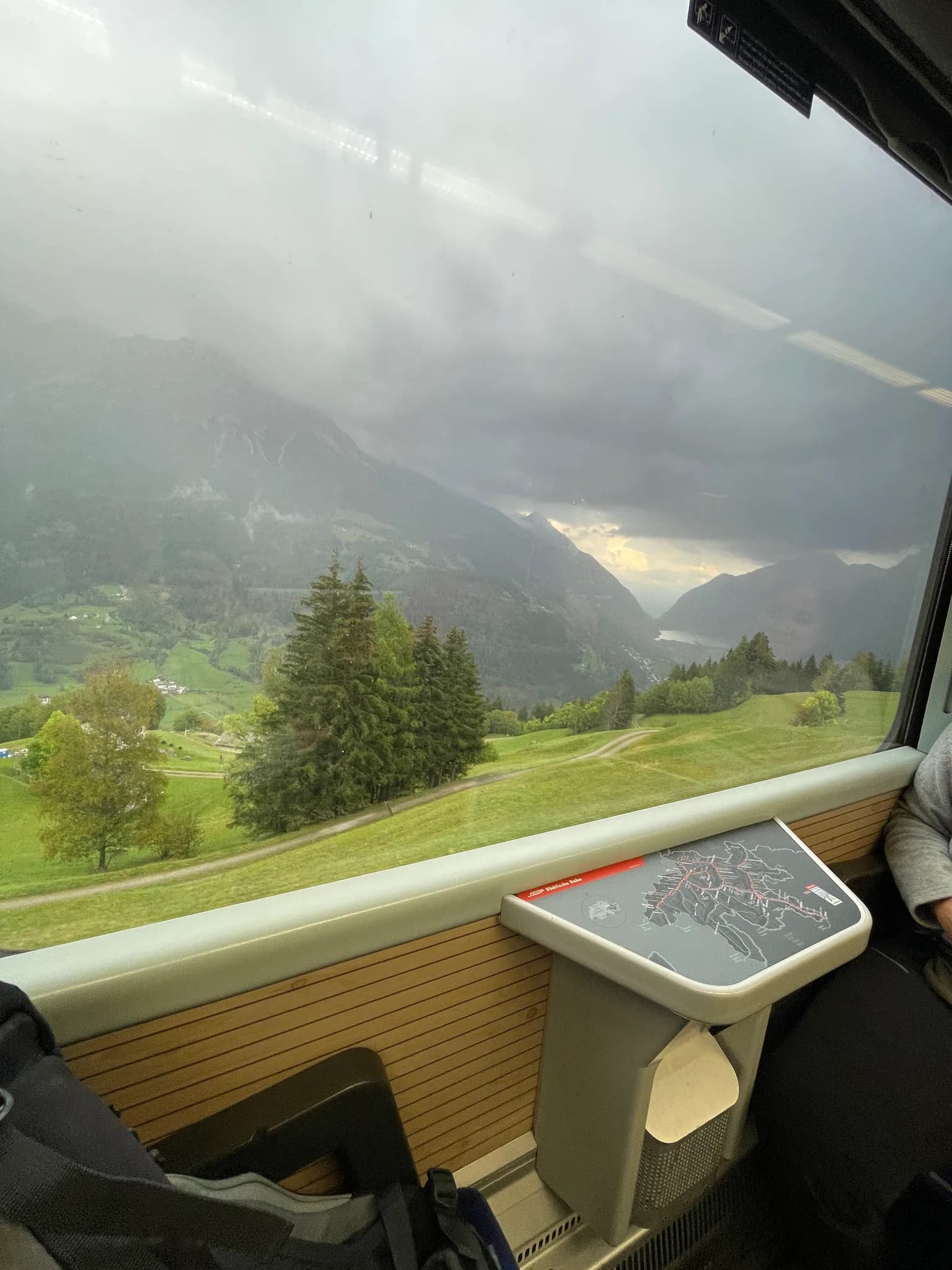
Even with the rain, the descent remained interesting. The vegetation changed, open green fields returned, and the architecture began to feel different. I did not experience a dramatic instant when Switzerland became Italy, but I could feel the train steadily descending towards a warmer landscape.
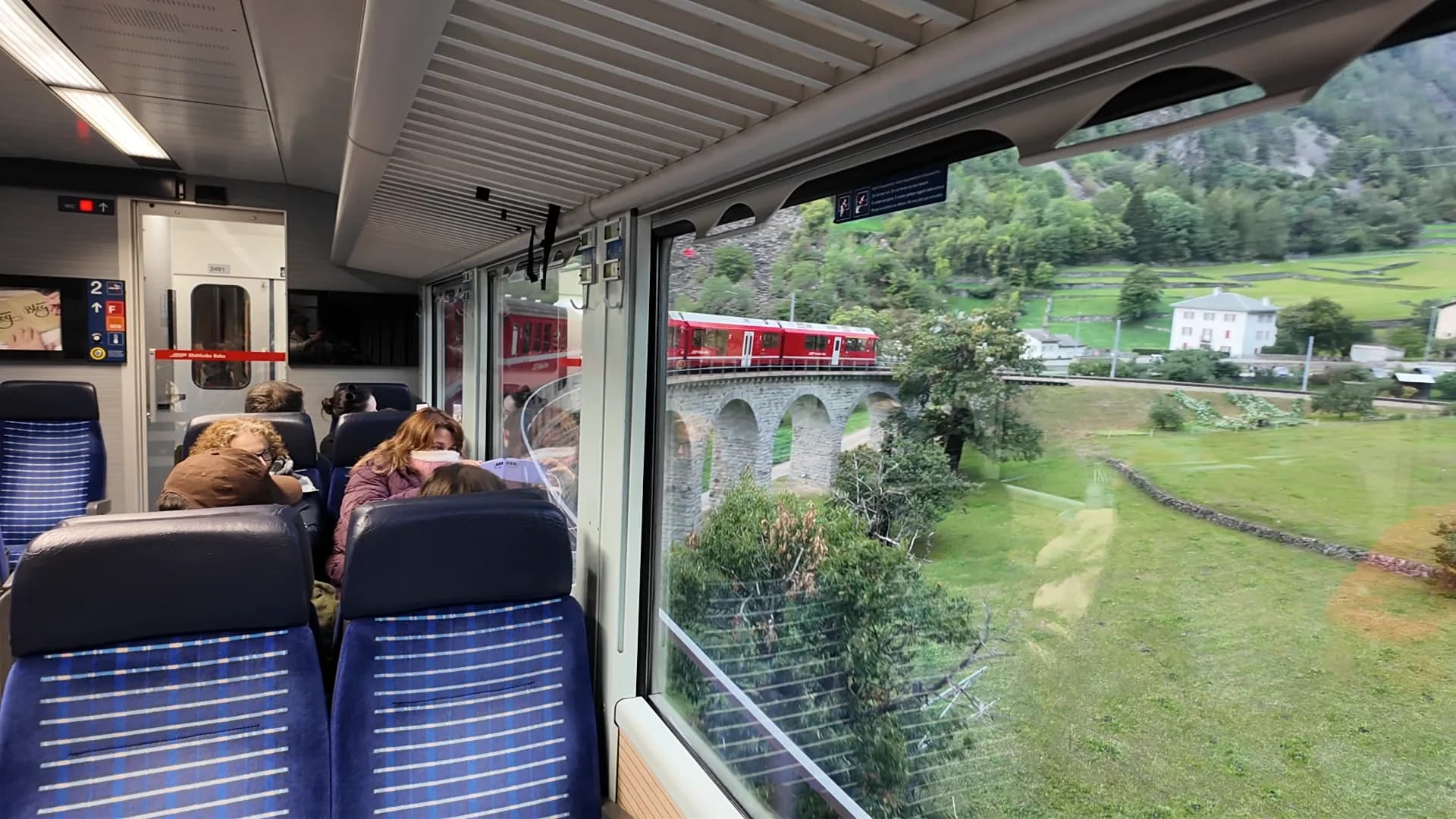
The Brusio Circular Viaduct was the final major highlight. From my right-side seat, I could see the train ahead of me curl around the complete stone loop. The moment was quick, but I had enough time to photograph and film it.
Arriving in Tirano and continuing to Lake Como
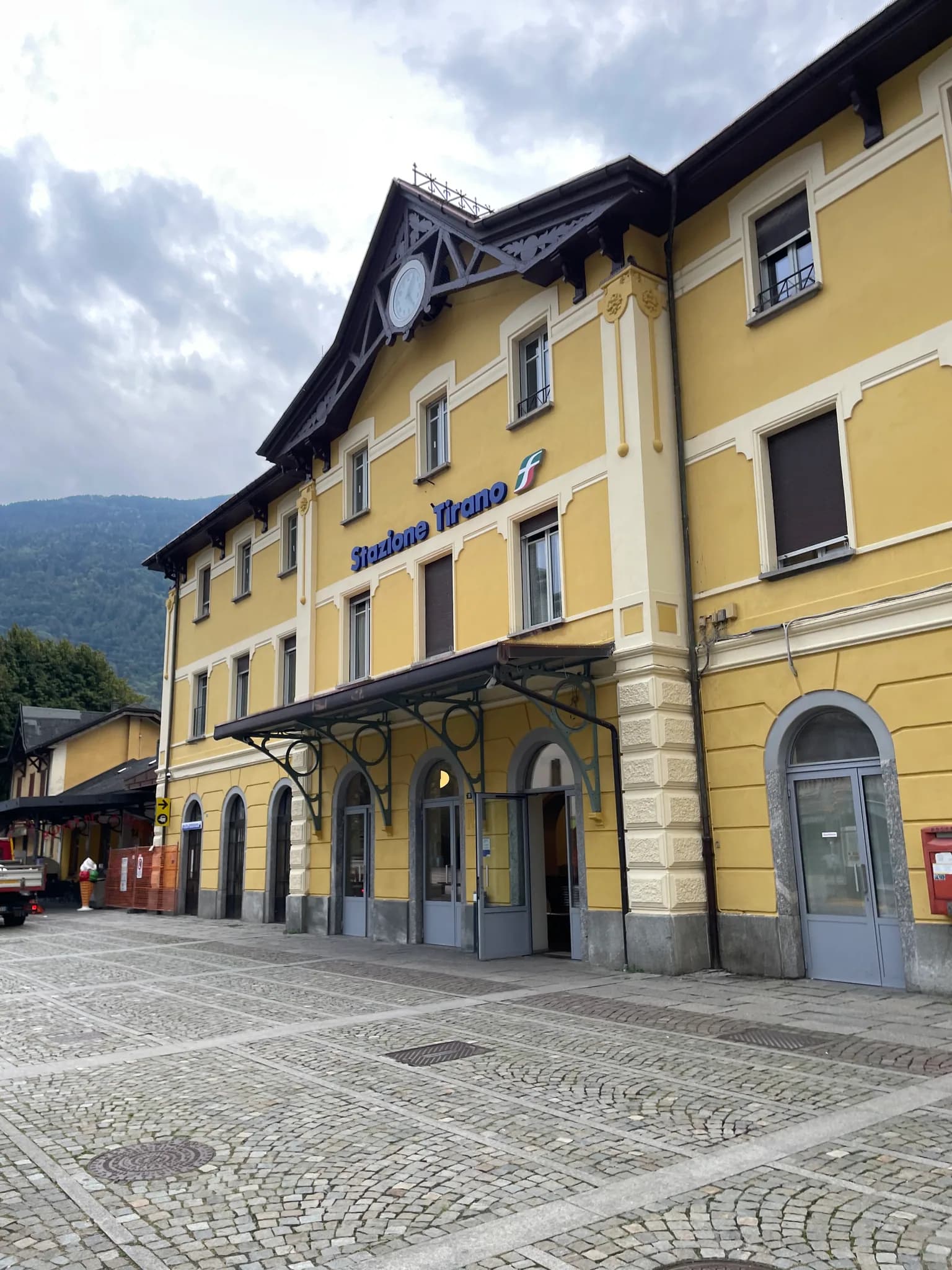
I arrived in Tirano at 17:06. A train marked for Milano was already waiting and scheduled to leave at 17:10, so I boarded immediately. I later left it at Monza and changed for Como. After an entire day of precisely timed Swiss trains, the first Italian train of the trip departed about ten minutes late. The timing felt almost comically appropriate.
What did the regional Bernina route cost with Interrail?
The trains cost me nothing extra beyond the Interrail pass and the travel day I activated. I did not reserve a seat. My only additional expense during the Chur–Tirano journey was lunch at Alp Grüm.
- Regional trains from Chur to Tirano: no additional cost with my Interrail pass.
- Compulsory reservation: none on the regional trains.
- Optional current RhB reservation between St. Moritz and Tirano: CHF 5 (about €5.34), which I did not buy.
- Goulash soup and bread: CHF 14 (about €14.96).
- Sparkling water: CHF 3.50 (about €3.74).
- My total additional spend on the route: CHF 17.50 (about €18.70).
The euro conversions use the ECB reference rate for 6 October 2026, when €1 equalled CHF 0.9359. They are included for comparison and may differ from the rate or fees charged by a bank. See the ECB’s historical Swiss-franc reference rates.
Regional trains or panoramic Bernina Express: which would I choose?
I would choose the regional trains again. The ability to stop at Alp Grüm, take photographs through opening windows, use an unexpected open carriage, and travel without a compulsory reservation mattered more to me than having one assigned seat and a simpler direct ride.
- Choose regional trains if you already have Interrail, want flexible stops, care about photography, or prefer avoiding the compulsory panoramic-train reservation.
- Choose the branded Bernina Express if you want one simpler panoramic journey, an assigned seat, and onboard services without managing several trains and stopovers.
The regional version still required more attention than I expected. Tracking the stops, filming, watching the scenery, protecting a short connection, and knowing when to leave each train became mentally tiring. That planning load was the only meaningful downside for me.
What I would change next time
- Arrive earlier at Chur station so I can choose a forward-facing right-side seat without rushing.
- Save every short connection and platform before departure.
- Skip a roughly 50-minute Pontresina walk unless I can stay for several hours.
- Stop at Alp Grüm again for lunch and the viewpoint.
- Wear trousers rather than shorts if I hope to use an open-air carriage at altitude.
- Keep the regional-train format instead of changing to the panoramic Bernina Express.
Bernina Express regional trains FAQ
Does Interrail cover the regional trains on the Bernina route?
Yes. My second-class Interrail pass covered all four regional trains from Chur to Tirano. I activated one travel day and paid no additional train fare. Interrail states that a pass valid for Switzerland covers this route even though it ends in Italy.
Do you need to reserve the Bernina regional trains?
A reservation is not compulsory. I travelled without one in October and found seats. RhB now sells an optional CHF 5 reservation on the busy St. Moritz–Tirano section and recommends it at popular times, so check current conditions if you are travelling in high season.
Which side is best from Chur to Tirano?
I recommend the right-hand side when facing forward for each of the trains I took. It worked especially well for the Landwasser Viaduct, the high-Alpine landscapes after Pontresina, Val Poschiavo, and my view of the Brusio Circular Viaduct. The route twists repeatedly, so neither side is completely wrong.
How long did Chur to Tirano take on regional trains?
My complete day took 7 hours and 8 minutes, from 09:58 to 17:06. That included about 1 hour and 9 minutes in Pontresina and 1 hour and 23 minutes at Alp Grüm. A journey without those stopovers can be faster.
Is it worth stopping at Alp Grüm?
Yes. It was the most useful stop in my itinerary because the station has a restaurant and immediate mountain views. One hour and 23 minutes gave me enough time for soup, extra bread, photographs, and the nearby viewpoint without needing a long hike.
Can you use an open-air carriage on the Bernina route?
Sometimes. I used one between Pontresina and Alp Grüm without paying a supplement, but RhB publishes limited operating dates and weather can prevent it from running. Consider it a possible bonus, not a guaranteed feature of a regional ticket.
This was the eighth update from My 3-Month Interrail Journey Across Europe. Read why I recommend spending one night in Chur before this journey, or start building your own route with Railey’s free Interrail planner. After reaching Tirano, I continued directly towards Lake Como.